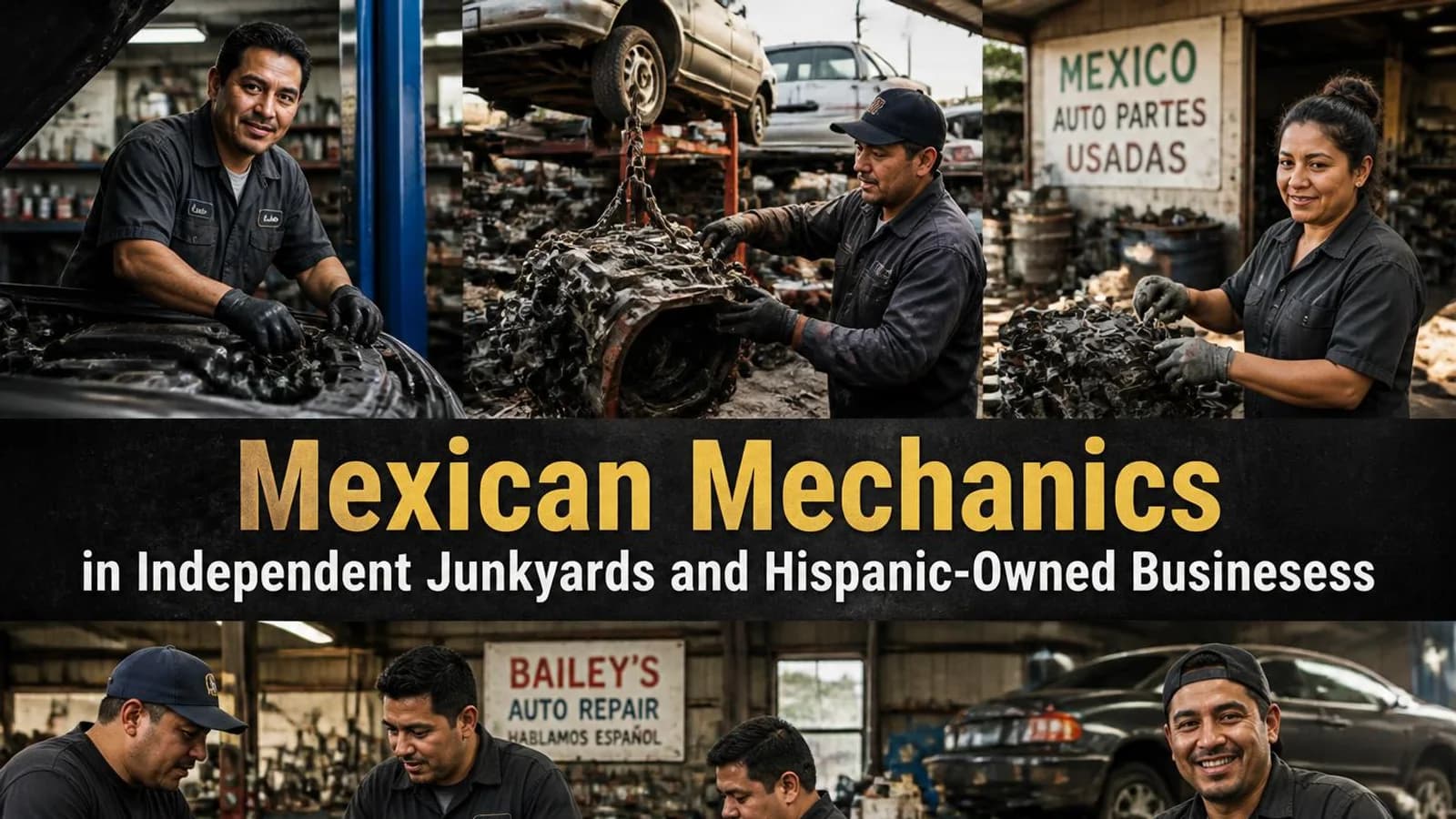
En muchas ciudades de Estados Unidos, especialmente en Texas, California, Florida, Illinois y Arizona, existen yonques y negocios de autopartes independientes fundados y operados por familias hispanas. Estos establecimientos ofrecen algo que las cadenas grandes no siempre pueden dar: confianza, comunicación directa y flexibilidad. Saber cómo comunicarte y negociar en estos espacios puede ser una ventaja real. La ventaja de la comunicación directa En un yonque independiente hispano, puedes describir el problema de tu vehículo directamente en español, con todo el detalle que necesites. No tienes que preocuparte por traducir síntomas ni pronunciar términos técnicos en inglés. Esto es especialmente útil cuando no sabes exactamente el nombre de la pieza, pero puedes describir dónde está, qué hace o qué sonido produce. Cómo preguntar y negociar con respeto La negociación es parte natural de la cultura en estos negocios, pero debe hacerse con respeto mutuo. Algunos consejos: • Explica claramente para qué vehículo es la pieza (año, marca, modelo, motor). Esto demuestra que sabes lo que necesitas y facilita la búsqueda. • Pregunta el precio antes de comprometerte. No hay problema en decir: "¿Cuánto me cuesta la pieza si la encuentras?" • Pregunta si incluye alguna garantía. Algunos negocios ofrecen garantías cortas (7 a 30 días) para piezas usadas. • Si el precio te parece alto, puedes preguntar con educación: "¿Hay alguna posibilidad de ajustar el precio si llevo efectivo?" Sin presionar. Pide siempre un recibo Aunque sea un negocio pequeño e informal, solicita siempre un recibo o comprobante escrito que incluya: • Nombre o descripción de la pieza. • Número de pieza si está disponible. • Precio pagado. • Fecha de la transacción. • Condición de la pieza (usada, reparada, etc.). Esto te protege si la pieza resulta incompatible o defectuosa. Verifica la pieza antes de irte Antes de salir del negocio, inspecciona la pieza visualmente: • ¿Coincide con la que tienes instalada en tu vehículo (tamaño, conectores, puntos de montaje)? • ¿Hay daños visibles, grietas, oxidación severa o partes faltantes? • ¿Los números de parte en la etiqueta coinciden con lo que buscabas? Si tienes dudas, puedes tomar una foto de tu pieza original en casa y mostrarla como referencia. El valor de construir relaciones Los mecánicos DIY que frecuentan los mismos yonques independientes con el tiempo construyen relaciones de confianza. Cuando el dueño te conoce, es más probable que te avise cuando llega un vehículo con la pieza que necesitas, que guarde algo para ti o que te dé un mejor precio en una compra futura. Estos negocios son parte del tejido económico de la comunidad. Tratarlos bien beneficia a todos.
English Translation
In many cities across the United States—especially in Texas, California, Florida, Illinois, and Arizona—there are independent junkyards and auto parts businesses founded and run by Hispanic families. These establishments offer something that big retail chains cannot always provide: trust, direct communication, and flexibility. Knowing how to communicate and negotiate in these spaces can be a real advantage. The Advantage of Direct Communication At an independent Hispanic salvage yard, you can describe your vehicle’s issue directly in Spanish, with as much detail as you need. You do not have to worry about translating symptoms or pronouncing technical terms in English. This is especially helpful when you do not know the exact name of the part, but can describe where it is located, what it does, or what kind of noise it makes. How to Ask and Negotiate with Respect Negotiation is a natural part of doing business in these shops, but it should always be conducted with mutual respect. A few tips: • Clearly explain which vehicle the part belongs to (year, make, model, engine). This shows that you know what you need and makes the search easier. • Ask for the price before committing. There is nothing wrong with saying: "How much will the part cost me if you find it?" ("¿Cuánto me cuesta la pieza si la encuentras?") • Ask if any warranty is included. Some businesses offer short return windows or warranties (7 to 30 days) on used parts. • If the price seems high, you can politely ask: "Is there any room to adjust the price if I pay in cash?" without being pushy. Always Ask for a Receipt Even if it is a small, informal shop, always request a written receipt or invoice that includes: • Name or description of the part. • Part number if available. • Price paid. • Date of the transaction. • Condition of the part (used, remanufactured, etc.). This protects you in case the part turns out to be incompatible or defective. Verify the Part Before Leaving Before walking out of the shop, visually inspect the part: • Does it match the one installed on your vehicle (dimensions, connectors, mounting points)? • Are there visible cracks, severe corrosion, or missing components? • Do the part numbers on the label match what you were looking for? If in doubt, take a picture of your original part at home and show it as a visual reference. The Value of Building Relationships DIY mechanics who frequent the same independent salvage yards build relationships of trust over time. When the owner knows you, they are much more likely to notify you when a car with the part you need arrives, hold an item for you, or offer you a better deal on future purchases. These businesses are an essential part of the community’s economic fabric. Treating them with respect benefits everyone.
Discussion
Comments
0 commentsNo comments yet
Be the first to comment on this article.
Join the conversation
Leave a Comment