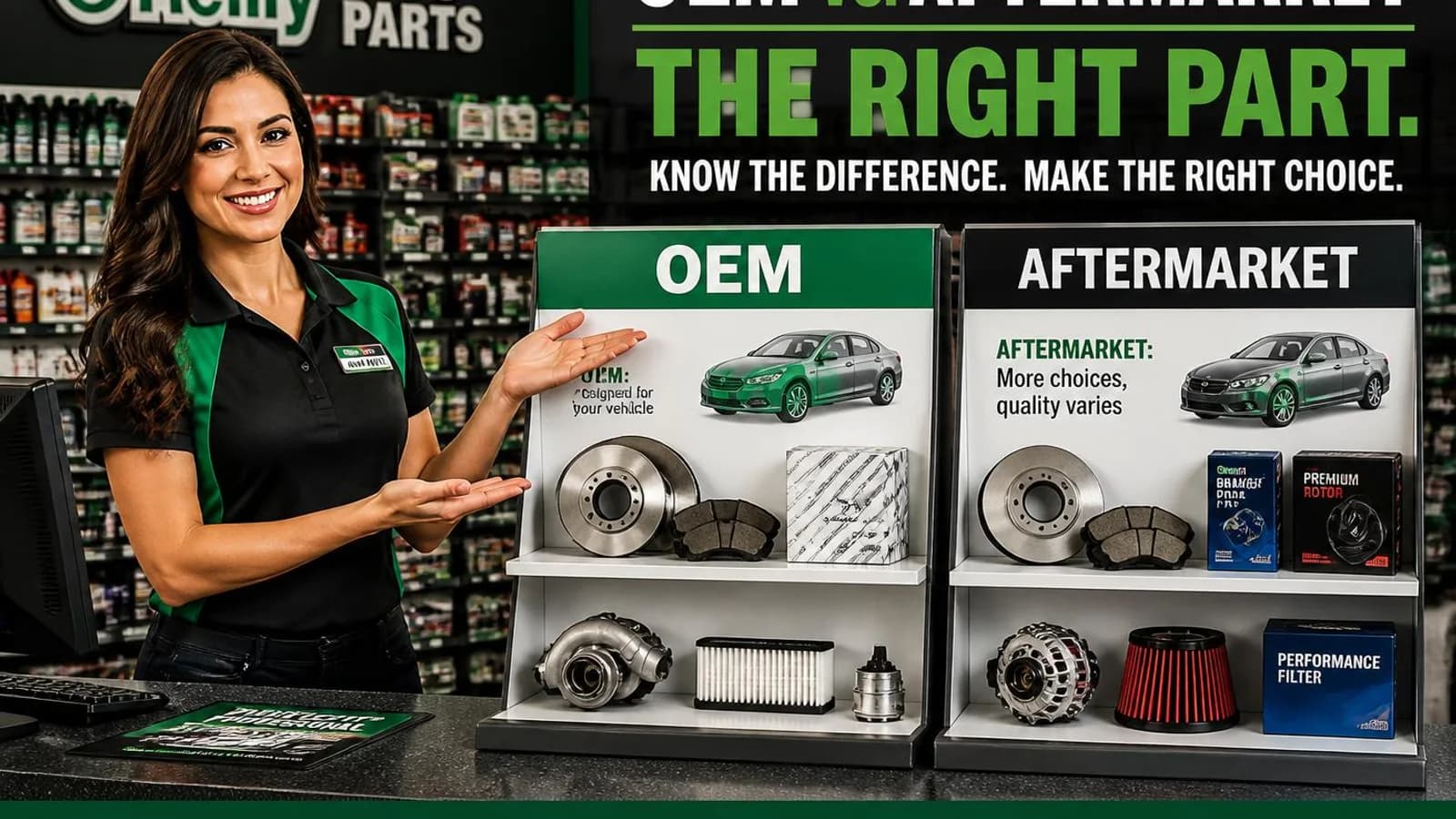
Una de las decisiones más importantes al comprar una autoparte es elegir entre una pieza OEM (fabricante original) y una pieza aftermarket (fabricada por un tercero). Esta decisión afecta el desempeño, la durabilidad, el costo y en algunos casos la seguridad de tu vehículo. ¿Qué es una pieza OEM? OEM significa Original Equipment Manufacturer. Son las piezas fabricadas por el mismo proveedor que equipó tu vehículo en la fábrica o que llevan la marca del fabricante del auto (Ford, Toyota, GM, Honda, etc.). Ventajas: • Ajuste perfecto garantizado. • Calidad probada para ese vehículo específico. • Generalmente incluyen garantía del fabricante. Desventaja: • Son más caras, a veces significativamente. ¿Qué es una pieza aftermarket? Son piezas fabricadas por empresas independientes que no son el fabricante original del vehículo. Las hay de muy diferentes calidades. Marcas reconocidas en el mercado aftermarket incluyen: Bosch, Monroe, Gates, Dorman, ACDelco (para uso no-GM), Denso, NGK, entre otras. Ventajas: • Precio menor que las OEM. • Mayor disponibilidad, incluyendo piezas mejoradas respecto al original. Consideraciones: • La calidad varía enormemente entre marcas. No todas las piezas aftermarket son iguales. • Algunas piezas genéricas baratas pueden fallar antes de tiempo. Cuándo usar OEM y cuándo usar aftermarket Usa OEM cuando: • La pieza involucra seguridad crítica y el costo es justificable (bolsas de aire, módulos ABS, sensores de freno). • Tu vehículo está bajo garantía del fabricante. • No encuentras una marca aftermarket confiable para esa pieza específica. Usa aftermarket de marca reconocida cuando: • La diferencia de precio es significativa y la marca tiene buena reputación. • Es una pieza de mantenimiento rutinario (filtros, pastillas de freno, amortiguadores). • El canal refaccione u otras fuentes confirman que esa marca aftermarket tiene buen desempeño para tu modelo. Evita piezas sin marca o de origen desconocido para: • Frenos, dirección, suspensión, sensores de seguridad o cualquier componente que afecte directamente el control del vehículo. Verifica siempre el ajuste antes de instalar Aunque la descripción diga que la pieza es compatible con tu vehículo, compara físicamente: • Tamaño y dimensiones. • Conectores eléctricos (número de pines, forma). • Puntos de montaje. • Materiales y peso cuando sean relevantes. El costo total, no solo el precio inicial Una pieza barata que falla en seis meses cuesta más que una de calidad media con dos años de vida útil. Calcula el costo total considerando: precio, tiempo de instalación y garantía. Y recuerda: en componentes de seguridad, no conviene ahorrar a costa de la protección.
English Translation
One of the most important decisions when purchasing an auto part is choosing between an OEM (Original Equipment Manufacturer) part and an aftermarket part (made by a third party). This decision impacts performance, durability, overall cost, and in some instances, vehicle safety. What is an OEM Part? OEM stands for Original Equipment Manufacturer. These are parts manufactured by the exact supplier that equipped your vehicle on the assembly line, or sold under the vehicle manufacturer's genuine brand packaging (Ford, Toyota, GM, Honda, etc.). Advantages: • Guaranteed exact fitment. • Tested and proven quality engineered for that specific vehicle. • Generally backed by a manufacturer warranty. Disadvantage: • Higher cost, often significantly more expensive. What is an Aftermarket Part? These are parts built by independent companies other than the original vehicle manufacturer. They span a wide range of quality levels. Reputable brands in the aftermarket sector include: Bosch, Monroe, Gates, Dorman, ACDelco (for non-GM applications), Denso, NGK, among others. Advantages: • Lower cost than OEM. • Broader availability, sometimes including redesigned or improved parts that resolve known factory flaws. Considerations: • Quality varies widely between different aftermarket brands. Not all third-party parts are created equal. • Cheap, no-name generic parts may fail prematurely. When to Choose OEM vs. Aftermarket Use OEM when: • The component is safety-critical and the added cost is justified (airbags, ABS control modules, wheel speed/braking sensors). • Your vehicle is still under active factory warranty. • You cannot find a reputable aftermarket manufacturer for that specific component. Use Reputable Aftermarket Brands when: • The price difference is substantial and the aftermarket brand holds a proven track record. • It is a routine maintenance item (filters, brake pads, shock absorbers). • The refaccione channel or other trusted automotive sources confirm that the aftermarket brand performs reliably on your model. Avoid Unbranded or Unknown-Origin Parts for: • Brakes, steering, suspension, safety sensors, or any component directly tied to vehicle stability and control. Always Verify Fitment Prior to Installation Even when the listing states that the part is compatible with your vehicle, physically compare: • Overall size and dimensions. • Electrical connectors (pin count, connector shape, locking tabs). • Mounting holes and bracket locations. • Build materials and weight where applicable. Total Cost, Not Just the Initial Price Tag A dirt-cheap part that fails in six months costs far more in the long run than a mid-tier quality part with a two-year service life. Factor in the total cost: purchase price, labor/installation time, and warranty coverage. And remember: when it comes to safety components, saving a few dollars at the expense of protection is never worth it.




Discussion
Comments
0 commentsNo comments yet
Be the first to comment on this article.
Join the conversation
Leave a Comment